The Hidden Cost of Abiotic Stress: What's Happening Inside Your Crop Before You See the Damage
Updated: Jun 4

When a grower walks a field and spots stunted plants or a lower harvest than expected, the conclusion is usually simple: the crop was stressed.
By the time stress becomes visible in a crop, the biological decisions that limit yield have already been made.
Long before leaves show symptoms, fruit growth rate slows, or physiological fruit defects show, the plant is already under internal pressure.
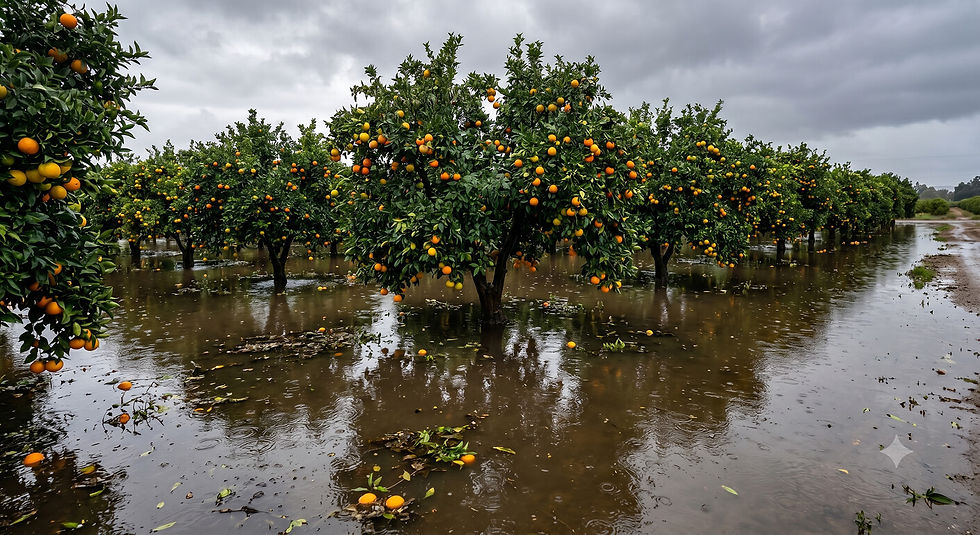
Abiotic stressors such as drought, heat, salinity, waterlogging and nutrient imbalance are the biggest constraints on global crop productivity.
Understanding what happens inside the plant before visible damage appears is where real performance gains are made.
The First Sign of Trouble: Reactive Oxygen Species
The moment a plant hits a stressor such as temperatures spikes, soil that dries out or salt levels climb, its cells start to produce reactive oxygen species (ROS).
These unstable molecules are a normal part of plant metabolism, but under stress, they build up faster than the plant can manage them.
The result is oxidative damage.
ROS attack cell membranes, break down proteins, and disrupt enzyme activity. And this starts within minutes of stress onset, long before any visible symptoms appear.
A leaf that looks perfectly healthy may already be struggling internally.
Research published in Frontiers in Plant Science confirms that ROS aren't just damaging, they also act as signals, triggering downstream responses in the plant.
The window between initial ROS build-up and visible damage is exactly where early intervention can make the biggest difference.
The Energy Problem: Photosynthesis Under Pressure
Photosynthesis powers everything else the plant does. It's also one of the first systems to suffer under stress.
When a plant is hot or dry, it closes its stomata to conserve water. This cuts off CO₂ intake, slowing down energy production.
At the same time, ROS damage chloroplast membranes and break down chlorophyll, reducing the plant's ability to capture light. The result? An energy shortage that ripples through every other plant process.
Growth slows. Reproductive development gets deprioritised. The plant shifts into survival mode.
Research at Stellenbosch University showed this clearly in C4L-treated plants. Under salinity stress, genes linked to chlorophyll synthesis were upregulated, allowing plants to maintain energy production when untreated plants were already declining.
In practical terms, this means the plant continues producing, growing, and developing where others begin to shut down.
Explore the full C4L technology overview to see how this works at a genetic level.
When the Plant's Internal Signals Break Down
Plants don't have a nervous system, but they do have a sophisticated hormonal network. Hormones like abscisic acid (ABA), gibberellins, cytokinins, and ethylene regulate everything from root growth to how the plant responds to stress.
Under abiotic stress, this system is quickly thrown off balance. Stress hormones surge. Growth hormones are suppressed. The plant trades its productive ambitions for short-term survival.
Critically, this hormonal shift happens days or weeks before visible symptoms appear. A crop that looks fine in early spring may already be running a suppressed growth programme that will quietly limit its peak yield, even if nothing looks wrong yet.
Yield Loss Is the Final Symptom, Not the Problem
This is the key insight: yield loss doesn't happen at harvest. It's decided weeks or months earlier, during vegetative growth, at flowering, at fruit set.
By the time you can measure the damage, the biological decisions that caused it are long made.
Waiting for visible stress before acting is, in biological terms, waiting for the damage report rather than preventing the damage.
Preparing the Plant Before Stress Arrives
Stress priming, activating a plant's defences before a stress event occurs, is one of the most effective strategies available to growers today.
A PhD study at Stellenbosch University found that C4L application upregulated salinity-related genes in Arabidopsis thaliana even without salt stress present. When stress was introduced, primed plants showed significantly better tolerance than untreated controls.
The same priming effect also strengthens cell walls and supports root health, making plants more resilient to disease pressure at the same time.
For growers managing maize, soybeans, citrus, or any crop across variable conditions, incorporating a priming treatment at key growth stages means the plant enters periods of potential stress already prepared, not scrambling to catch up.
What Growers Can Do
Act early Priming applications with C4L during key growth stages prepare the plant before challenges arrive.
Protect photosynthesis Inputs, such as C4L, that support chlorophyll synthesis, help maintain the energy supply everything else depends on.
Support ROS management Technologies, such as C4L, which boost the plant's own antioxidant systems reduce the damage at the source.
Use crop-specific timing Stress affects different crops at different stages; tailor your programme to the highest-risk windows.
The Bottom Line
Yield loss is not a harvest problem. It is a biological process that starts long before symptoms appear.
Growers who act early, before stress becomes visible, are the ones who maintain
consistency, quality, and performance under pressure.
With over 20 years of research across 48 crops, C4L Technology was developed to support plant systems where it matters most, before stress translates into lost yield.
If you are evaluating crop performance under variable conditions, now is the time to look deeper.
We are actively working across citrus, grapes, potatoes and various other crops in South Africa. If this is relevant to your operation, it is worth starting the conversation.
Get in touch with us @ admin@biorevolution.co.za


Comments